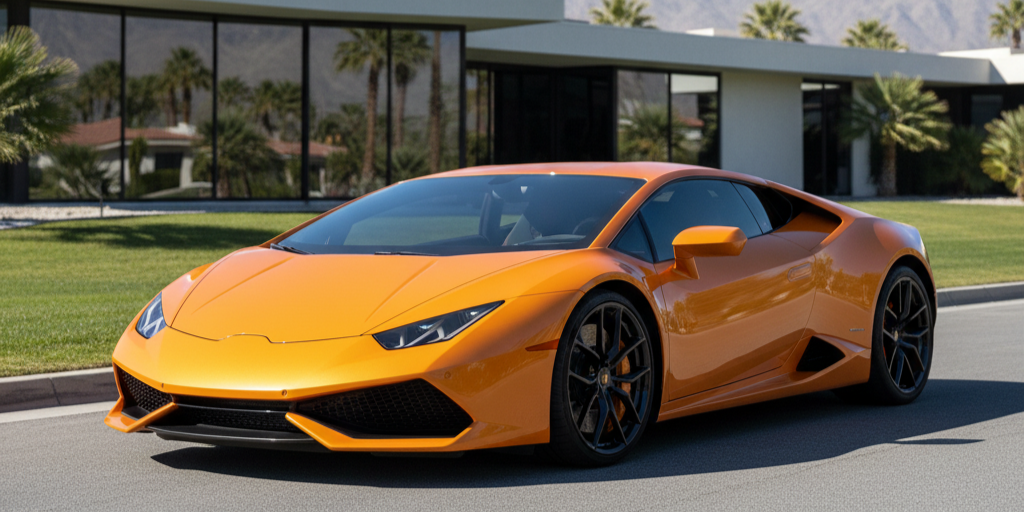
Lamborghini Huracán Reliability: The 610hp Everyday Supercar Guide
📋 In This Guide
Street driven, annually serviced Huracáns are reaching 60,000-80,000 miles with no major mechanical failures. Several owners have reported 100,000+ km with original engine internals intact.
The story changes dramatically if the car was tracked.
1. Huracán Variants: Which Is Most Reliable?
| Variant | Power | Key Spec | Reliability |
|---|---|---|---|
| LP610-4 (2014— | 602 hp | AWD, original | Excellent |
| LP580-2 (2016— | 572 hp | RWD, lighter | Excellent |
| Performante (2017— | 631 hp | Active aero, lightweight | Track-use risk 筮 |
| EVO (2019— | 631 hp | AWD, port+DI injection | Best overall |
| EVO Spyder | 631 hp | Convertible | Same as EVO |
| STO (2020- | 631 hp | Track car - street legal | Highest track risk |
Best for reliability: Huracán EVO. Port injection reduces carbon deposits. Improved traction management reduces mechanical stress. Latest calibration for DCT.
Most risk: Huracán STO - designed explicitly for track use. If used as intended, DCT and tire costs are extreme.
2. The Street vs. Track Ownership Split
This is the most important concept for Huracán ownership reliability:
Street Huracán (95%+ highway/road use):
- Engine: Robust. No systematic failures documented for street-only use.
- DCT: Long service life (50,000—0,000 miles to first major event).
- Tires: 10,000—0,000 miles rear.
- Annual cost: $5,000—10,000.
Track Huracán (Regular track days):
- Engine: Still robust —he V10 handles track RPM well.
- DCT: Clutch packs can wear out in 15,000—0,000 miles. Mechatronics unit at risk.
- Tires: 1,500—000 miles on a track set.
- Annual cost: $20,000—50,000+.
3. Transmission Deep-Dive
The Huracán’s 7-speed Graziano DCT is smooth, fast, and well-engineered for road use. On track, it faces challenges no road transmission gearbox was designed for:
- Repeated clutch engagement at full throttle = extreme heat.
- Street cooling system cannot adequately cool the gearbox continuously.
- Mechatronics unit (the electrohydraulic brain of the transmission) builds heat and can develop position sensor errors.
Early warning signs: Slight hesitation on rapid 3rd or 4th upshifts at full throttle. This is not “normal” on a healthy DCT -this is mechatronics wear.
Don’t panic: The fix at early detection (clutch pack only) = $5,000—8,000. Wait until full failure = $15,000—25,000.
4. Brakes & Tires: The Ongoing Budget
| Item | Street Use | Track Use |
|---|---|---|
| Rear Tires (per tire) | $600—900, 15k—0k miles | $600—900, ~1,500 miles |
| Front Pads | $800—1,200, 20k miles | $800—1,200, 5k miles |
| Front Rotors | $1,500—2,500, 40k miles | $1,500—2,500, 10k miles |
Optional CCB / carbon ceramic brakes (on Performante and above): replacement cost $15,000—25,000 for a full set.
5. Annual Budget Summary
| Category | Street Only | Mixed Street/Track |
|---|---|---|
| Service + Fluids | $1,500—3,000 | $1,500—3,000 |
| Tires | $2,000—3,500 | $5,000—12,000 |
| Brakes | $1,000—2,000 | $3,000—8,000 |
| Transmission Reserve | $500/yr amortized | $3,000/yr amortized |
| Annual Total | $5,000—9,000 | $12,500—26,000 |