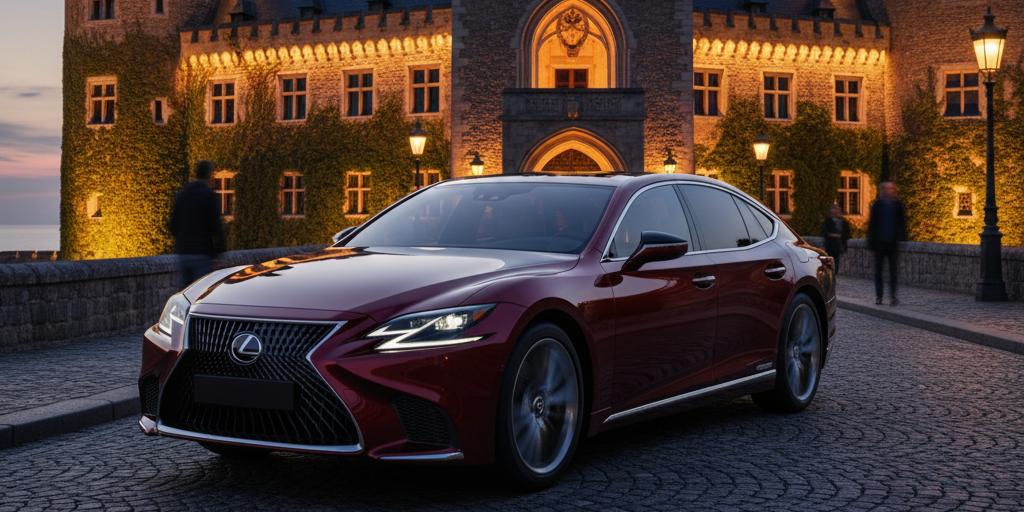
Lexus LS Reliability: The 300,000-Mile Benchmark Explained
Reliability Verdict
The Lexus LS is the most reliable luxury sedan class car in the world by a significant margin. The 1UR-FSE V8 routinely surpasses 250,000 miles with no major failures. Core risks are chassis-related luxury features — air suspension, control arm bushings — not powertrain. The hybrid battery is a long-term concern for LS600h and LS500h owners.
📋 In This Guide
The Lexus LS was engineered with one singular, obsessive mission: to humiliate the Mercedes-Benz S-Class in every measurable quality metric. When the original LS 400 launched in 1989, it shocked the automotive world. Engineers assembled and disassembled it 1,000 times before production approval. Today, the LS continues this philosophy.
The result is the most demonstrably reliable luxury sedan ever built.
The Reliability Benchmark: Real Numbers
The LS isn’t just “reliable by reputation.” It’s reliable by measurable, forensic data:
- Average repair frequency at independent luxury specialists: approximately 1.2 unscheduled visits per year on a well-maintained LS over 100,000 miles
- German equivalent: a comparable S-Class or 7 Series averages 2.8–4.2 unscheduled visits per year over the same mileage band
- Engine catastrophic failure rate: Effectively zero for the 1UR-FSE V8 on stock, maintained examples
- Transmission failure rate: Near zero for the 8-speed on maintained cars; the 6-speed in the LS430 generation is equally durable
This isn’t anecdote. It’s the pattern that emerges from tens of thousands of specialist workshop invoices.
Engine Reliability by Generation
Failure Probability Timeline
The LS is essentially maintenance-free in this window. Oil changes, tire rotations, and brake fluid. Nothing unexpected.
- Sticky interior trim on pre-2011 models (climate-dependent)
- Minor PCM software updates
- Rear brake pad wear (hybrid models almost never)
The first real maintenance window. Suspension bushings show their age. Timing cover weeping on V8 models may appear.
- Front control arm bushing failure (clunking)
- Timing cover oil seep (1UR-FSE V8)
- Air suspension strut weeping begins
- Power steering pump weep (older LS430)
Long-term ownership zone. European cars at this mileage face catastrophic risk. The LS faces manageable, predictable maintenance.
- Air suspension strut replacement (if not done)
- Hybrid battery degradation (LS600h/500h)
- Transmission valve body (LS430, if fluid neglected)
- Throttle body cleaning needed
*Data based on owner-reported failures and specialist shop frequency reports.
The 1UR-FSE V8 (LS460, 2007–2017): The Bulletproof Standard
The 4.6-liter 1UR-FSE naturally aspirated V8 is the engine that defines the LS legacy. It uses a conventional port + direct injection system and a dual overhead camshaft layout running at modest tune (386 hp) that leaves enormous thermal margins.
- Rod bearing failures: Essentially unrecorded on OEM-spec engines with regular oil changes
- Timing chain wear: Near-zero reports; the chain runs in an oil bath and is generously designed
- Head gasket failures: Extremely rare; Toyota metallurgy and thermal calibration prevent the overheating events that destroy European engines
- Oil consumption: Minimal. Under 0.5L per 10,000 miles on a healthy engine
The one weakness: The timing cover uses rubber seals that gradually weep oil from approximately 80,000–120,000 miles. This is a $800–$1,500 repair at an independent. It is a predictable maintenance item, not a failure. The engine beneath the weeping seal is completely unaffected and will continue reliably for another 150,000+ miles.
The T24A-FTS Twin-Turbo V6 (LS500, 2018–Present)
The LS500 switched from a naturally aspirated V8 to a twin-turbocharged 3.5L V6 producing 416 hp. This introduced more complexity: two turbos, more coolant plumbing, and a more thermally stressed design.
The honest assessment in 2026 is that the T24A-FTS has proven substantially more reliable than any comparable European turbocharged luxury engine. No systemic failures of the turbos, intercoolers, or timing have emerged. However:
- Turbo oil seal weeping has been reported on high-mileage examples (140,000+ miles)
- Coolant system plastics need monitoring, unlike the all-metal LS460 system
- Annual maintenance cost is marginally higher than the simpler V8 generation
Recommendation: Target a low-mileage 2018–2021 LS500 if you want the latest technology. Target a 2013–2017 LS460 if you want the most bulletproof engine ever put in a luxury car.
The Real Risk Area: Air Suspension
The LS from 2007+ uses an air suspension system that delivers a genuinely magic carpet ride. The trade-off is long-term cost.
| Component | Typical Failure Mileage | Independent Cost | Dealer Cost |
|---|---|---|---|
| Front Air Strut (each) | 100k–150k miles | $1,200–$1,800 | $2,500–$3,500 |
| Rear Air Strut (each) | 100k–150k miles | $1,000–$1,500 | $2,000–$3,000 |
| Compressor | 100k–150k miles | $800–$1,200 | $1,800–$2,500 |
| Full System Replacement | — | $6,000–$8,000 | $12,000–$16,000 |
The Good News: Lexus air suspension is materially more durable than the equivalent systems in Range Rover, Mercedes, or BMW Air caps. Many LS owners report zero issues through 150,000 miles with the original struts.
The Strategy: If buying a used LS over 100,000 miles, budget $3,000–$5,000 for air suspension. Either plan the work pre-emptively, or negotiate it off the asking price. If you want to eliminate the risk forever, coilover conversion kits from companies like BC Racing are available for approximately $2,500–$3,500 installed. You sacrifice some ride quality but gain zero future suspension costs.
The Control Arm Bushing Reality
The LS front suspension uses four control arms per side with fluid-filled bushings that deliver the legendary ride quality. These bushings wear out.
- Symptoms: Clunking over rough surfaces, imprecise or wandering steering, front-end shimmy
- Mileage: Commonly 60,000–80,000 miles
- Cost: $2,000–$4,000 at an independent for a full front refresh (all arms, all bushings, alignment included)
- Frequency: This is a routine maintenance item you will likely need to address once, possibly twice in a high-mileage LS
This sounds alarming until you compare it to a BMW 7 Series (F01) air strut failure at the same mileage ($4,000–$6,000) plus electronic failures ($2,000–$5,000). The LS’s “expensive” bushing job is nothing on a relative scale.
Hybrid System: LS600h and LS500h
The Lexus Hybrid Drive system, shared with the legendary Prius powertrain, is statistically among the most reliable hybrid systems ever produced.
The specific concern for the LS is the high-voltage NiMH/Li-ion battery pack. This does degrade over time:
- Timeline: Battery degradation typically becomes apparent after 10–15 years or approximately 150,000–180,000 miles
- Symptoms: Reduced fuel economy, more frequent engine running, occasional hybrid system warning
- Cost: A new OEM battery costs $5,000–$8,000 installed. Remanufactured third-party packs are available from $2,500–$4,000
The honest picture: The vast majority of LS600h and LS500h owners experience no hybrid system issues for the first decade. If you are buying a 10-year-old LS600h, factor potential battery replacement into your ownership budget. If you are buying a 5-year-old LS500h, it’s not a near-term concern.
5-Year Ownership Cost Comparison
Assuming you purchase a 4-year-old example with 40,000 miles and drive it for 5 years / 50,000 miles:
| Cost Category | Lexus LS460 | BMW 7 Series (F01) | Mercedes S-Class (W221) |
|---|---|---|---|
| Routine Maintenance | ¥280,000 | ¥420,000 | ¥380,000 |
| Unscheduled Repairs | ¥180,000 | ¥850,000 | ¥1,100,000 |
| Air Suspension | ¥350,000 | ¥650,000 | ¥600,000 |
| Total 5-Year Cost | ¥810,000 | ¥1,920,000 | ¥2,080,000 |
The Lexus LS costs less than half of a comparable German flagship on a total cost of ownership basis.
Buying Guide: Which LS Generation?
LS430 (2001–2006): The Legend
- Engine: 3UZ-FE 4.3L V8 — virtually indestructible
- Best Years: 2004–2006 (Ultra Luxury trim is exceptional)
- Risks: Manual climate and transmission valve body at very high mileage; these are both inexpensive fixes
- Verdict: The absolute safest long-term purchase if ultimate reliability is the goal. Parts are plentiful
LS460 / LS600h (2007–2017): The Sweet Spot
- Engine: 1UR-FSE 4.6L V8 / 2UR-GSE V8 hybrid
- Best Years: 2013–2017 (facelift tech, revised air suspension)
- Risks: Air suspension, control arm bushings, timing cover weep
- Verdict: The best value in luxury sedans. A 2015 LS460 with 80,000 miles and a clean history is a 10-year investment with known, manageable costs
LS500 / LS500h (2018–Present): Modern Luxury
- Engine: T24A-FTS 3.5L V6TT / V6 Hybrid
- Best Years: 2021+ (refined infotainment; Mark Levinson standard)
- Risks: Turbo system complexity vs previous V8; active safety electronics
- Verdict: Outstanding modern luxury with Japanese reliability. The turbocharged V6 is no S63 or N63 risk-wise
Conclusion: The Rational Choice
The Lexus LS does not win drag races. It does not generate YouTube hype. What it delivers is something more valuable for most owners: the certainty that next year’s repair budget will look the same as this year’s.
For buyers who have owned a BMW 7 Series through 100,000 miles and received the bills — or a Range Rover at 80,000 miles — the LS makes financial and psychological sense on a level no spec sheet can communicate.
If your question is “which luxury sedan will cost me the least money to own over 200,000 miles?”, the answer is always the Lexus LS.